
Drone Security & Estate Overwatch
Drone security services considered as part of an agreed estate-protection operation, connecting aerial observation with ground teams and clear reporting.
Discuss your requirementsAerial observation with an operational purpose
Across extensive grounds, a useful aerial view can change what the team on the ground understands. Pegasus Ops integrates drone security with estate protection, connecting observation, command and communications with the personnel responsible for a response.
Our estate experience includes thermal observation, mapping and live overwatch alongside residential security teams and K9 capability. The aircraft supports the protective plan: understanding a concern, checking an area or giving the ground team better information.
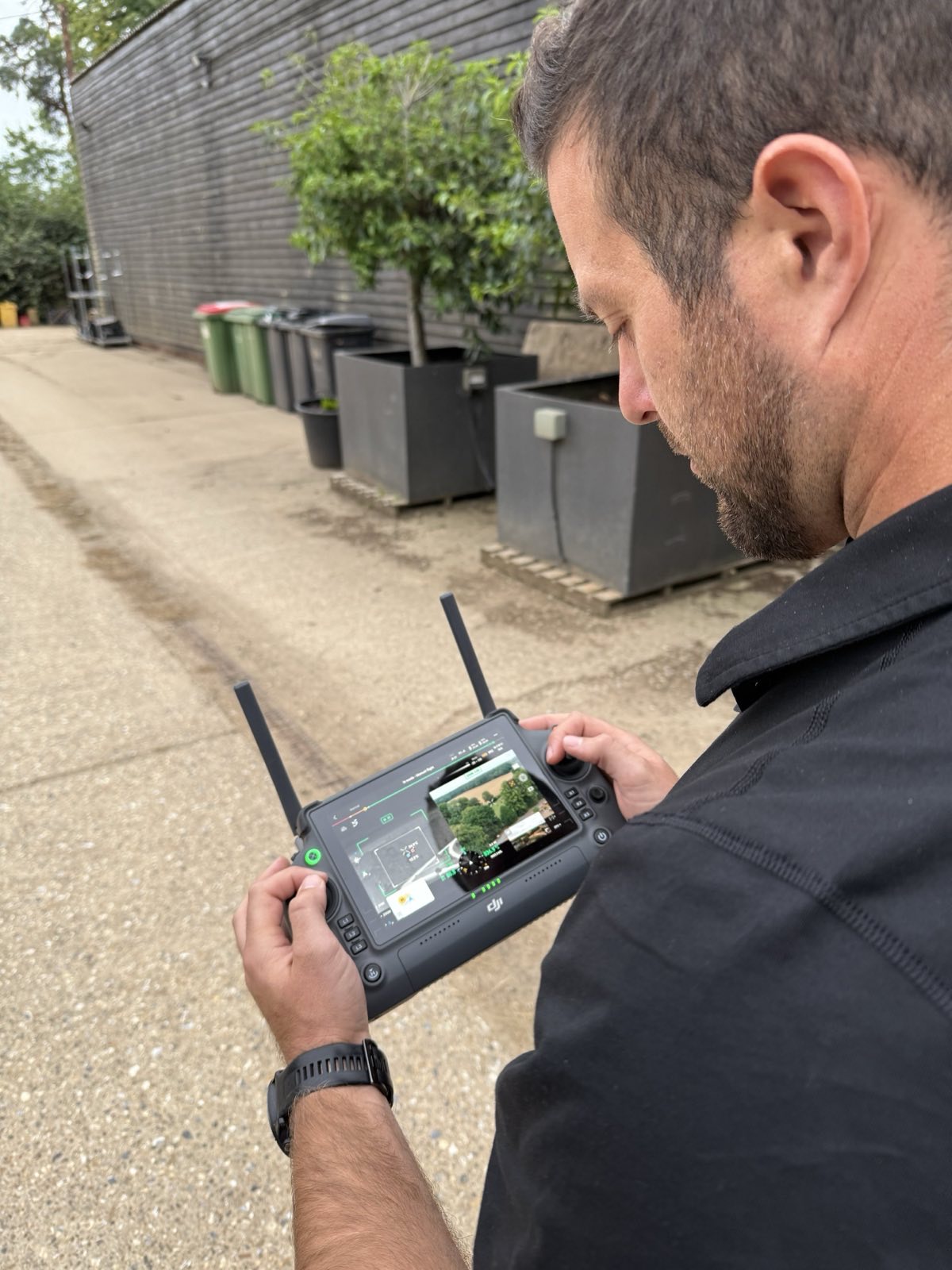
From thermal detection to a coordinated ground response
During a residential-security assignment across extensive open ground, a thermal drone detected an intruder. The drone operator guided a ground operator and K9 team to the intruder’s location, enabling their apprehension.
The drone provided an aerial view across the grounds and helped direct the response. The apprehension was carried out by the ground team.
Connect the aircraft with the ground operation
Useful observation needs a route into decisions. The brief identifies who operates the aircraft, who receives observations and who can authorise action on the ground. Reporting should distinguish an observation from a confirmed incident and record relevant uncertainty.
Drone deployment should fit alongside residential security personnel, access procedures and the person overseeing the estate. Aerial observation alone does not provide a physical response or replace the responsibilities of the ground team.
Assess the site and conditions first
The assessment considers the intended operating area, neighbouring properties, people who may be present, launch and recovery arrangements, communications and practical site constraints. Weather, airspace, visibility, equipment and applicable permissions can affect whether and how the task proceeds.
Day or thermal observation, operating periods and the equipment appropriate to the task are confirmed within the proposal. Capability should be described against the actual deployment; a camera specification is not a guarantee of detection, identification or continuous coverage.
Agree the information and reporting
The instruction sets out the purpose of observation, authorised recipients, reporting format and how any recordings will be handled. Relevant access, retention and sharing arrangements need to be understood before deployment. Keep sensitive plans and exact locations out of the general website enquiry form.
The team also needs a practical plan for interruption. If flying is unavailable or must stop, the estate manager should understand what the remaining ground arrangements provide and which decisions require review.
Experience within a wider estate assignment
In our published rural-estate assignment, Pegasus Ops brought residential security personnel, team leadership, drone operators and K9 capability into a coordinated operation. The estate was undergoing renovation and parts of its security infrastructure were incomplete.
The initial takeover developed into six months of sustained protection. That experience informs how we connect technology with people, procedures and reporting. Each new estate is assessed for its own layout, exposure and operating conditions. See estate security for the wider protective requirement.
Questions estate managers ask
Is this a counter-drone interception service?
This page concerns the use of a drone for an agreed protective observation task. Detecting or intervening against another aircraft is a different requirement and must not be assumed.
Can you provide uninterrupted aerial cover?
Operating periods and limitations depend on the site, personnel, equipment and conditions. Coverage is defined for the instruction rather than promised as unrestricted flight.
What should an initial enquiry include?
Explain the general estate setting, the question you need answered and the timing. Detailed plans and sensitive operational information can follow through an agreed channel.
DJI Matrice 4T & Matrice 4TD
Our drone capability is based on the Matrice 4T and Matrice 4TD. The aircraft and equipment are selected around the site, the observation task and the operating conditions.
Heat signatures and radiometric imagery
Both models have a native 640 × 512 infrared sensor, spot and area temperature measurement, and radiometric R-JPEG image capture. Enhanced thermal output modes are available; they do not change the native sensor resolution.
Wide, medium-tele and telephoto views
48 MP visible-light cameras support contextual views and closer observation from the same aircraft. Visual and thermal information can be reviewed together within the agreed task and reporting brief.
Laser-assisted reference
Integrated laser rangefinding can support the location references shared with the people managing the operation. Accuracy and usefulness depend on the target, conditions and method of use.
Technology directed by the protective brief
Patrol areas, operating periods, observation, reporting and response coordination are planned for the assignment. Site permissions, conditions and personnel determine what can be delivered.
Equipment references: DJI Matrice 4 Series specifications and Matrice 4TD specifications. The particular capture and reporting package is agreed with the client.
Commercial drone security
Our commercial drone security services apply the same coordination between aerial observation and ground personnel to extensive commercial sites. For renewable-energy assets, see solar-farm security and drone patrols.
Explore related support
Tell us what you need to protect.
Discuss the property, your priorities and the timing with Pegasus Ops. We will agree a focused next step and an appropriate way to review the detail.