
Solar Farm Security & Drone Patrols
Active drone patrols, live threat monitoring and coordinated ground security for solar sites exposed to intrusion and copper-cable theft.
Discuss your siteActively monitor the site. Identify concerns as they develop.
A solar farm’s copper cabling, electrical equipment and stored materials can attract theft, with the potential for expensive losses and disruption. Extensive boundaries and access routes make current information valuable to the people protecting the site.
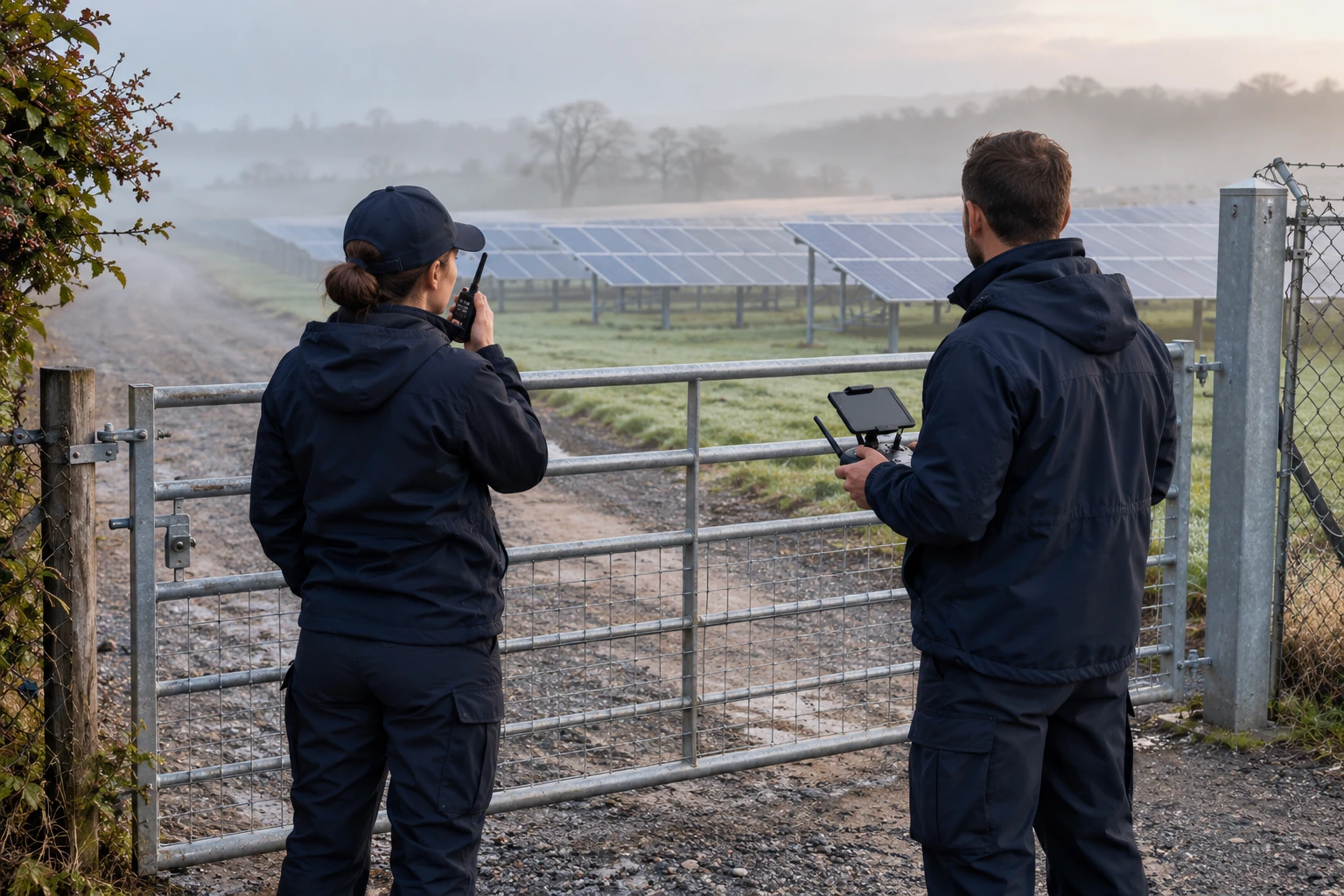
Pegasus Ops provides active drone security monitoring during commissioned operating periods. Operators look for people attempting to enter restricted areas, suspicious vehicle activity and possible interference with assets. Live observations help the designated ground team or control point assess what is happening and coordinate the response.
The operating brief identifies the asset owner, maintenance contacts and existing security provider. Everyone should understand the patrol priorities, communication routes and responsibilities before deployment.
Live monitoring focused on the threats to your site
Attempted intrusions
Monitor agreed boundaries, access routes and restricted areas for concerning activity. Assess observations against authorised site work and communicate suspected unauthorised presence to the designated response contact.
Suspicious vehicle activity
Observe vehicle activity relevant to the site’s security concern and record available details and locations. Share that information with the site contact and, where an incident is reported, the police through the agreed route.
Copper cabling and valuable equipment
Focus the monitoring brief on exposed assets, including copper cabling, stored materials and plant. Look for activity that may indicate attempted theft or interference, with priorities reviewed as site conditions and works change.
Ground security and police coordination
Provide live updates and location references to ground personnel and the designated control point. The site plan identifies who directs the response, who contacts police when required and how observations and relevant imagery are handed over.
Live security information backed by a usable incident record
Pegasus’s Matrice 4T and Matrice 4TD capability combines visible-light cameras with thermal imaging. Thermal observation can help identify heat signatures; visible imagery adds context. Vegetation, obstructions, weather and the scene itself affect what can be established.
The service combines live operational updates with an agreed incident record: attendance, monitoring periods, incident times, observed activity, relevant person or vehicle details, communications and actions. The reporting format, imagery handover and recipients are agreed so the site manager and security provider can use the information.
Operational imagery is handled through agreed access and retention arrangements. The capture brief focuses on the site and the security purpose, with permissions and privacy considered during planning.
What a solar farm patrol report can show
This illustrative framework shows how observations can be organised for the client and the designated response team. It is a sample format, rather than a record of a completed deployment. The contents, supporting evidence and reporting frequency are agreed for the commissioned task.
| Report item | Information to capture |
|---|---|
| Patrol reference | Time, agreed site zone and the patrol or observation reference. |
| Observation | What was observed, distinguishing recorded facts from an operator’s assessment. |
| Notification and responsibility | Who was informed, the communication route and who accepted the next action. |
| Action and handover | The agreed response, current status and any outstanding decision for the site’s responsible person. |
| Supporting material | Available imagery or references, handled through the agreed access and retention arrangements. |
| Follow-up | The issue to review, its responsible person and any agreed next step. |
Choosing a solar farm security contractor
A useful proposal explains who will attend, what they will monitor and who can act on an alert. Ask your solar farm security contractor to identify the operating hours, patrol areas, escalation contacts and the records you will receive. Agree which duties sit with Pegasus Ops and which remain with your site team or existing security provider.
Pegasus Ops can consider direct instructions and operated drone-security subcontracts. Our scope can define the pilot and aircraft, live observation, ground-team communications and incident reporting. Ground response, access management and any attendance outside the commissioned periods need explicit arrangements.
Use the paid pilot to check that the observation and response chain works for your site. Then agree mobilisation, recurring attendance, reporting, supervision, interruptions and review points in the quotation. Request a solar farm security assessment and quotation with a broad outline of the site and the coverage you need.
Start with a paid pilot. Build the right recurring service.
01 / Understand the site
Review the general concern, boundaries, access, existing alarms and CCTV, current personnel, required hours and decision-makers. Detailed site information follows through an agreed channel.
02 / Test the operation
Agree a paid pilot with defined personnel, aircraft, patrol periods and deliverables. Review practical observation, communications and the handover to ground personnel.
03 / Agree recurring support
Specify shifts or attendance periods, patrol priorities, reporting, supervision and review points. Identify how weather, battery changes and other interruptions will be managed.
04 / Price the complete service
The quotation distinguishes mobilisation, operated aircraft, staffing, reporting, travel and additional support. Direct instructions and operated subcontracts can both be considered.
Security patrols and solar inspections
A security patrol addresses people, access, activity and the protection of the site. A solar-panel inspection addresses the condition or performance of the installation. Both may use thermal and visible imagery, but their methods and reporting requirements differ.
If inspection work is required, define it separately: the assets to be captured, operating conditions, imagery, location references, analysis and reporting. Specialist fault diagnosis and maintenance recommendations need an appropriately qualified interpretation of the evidence.
For wider applications, see commercial drone security services. Our estate drone overwatch page explains how aerial observation can support private-property protection.
Connect drone patrols, CCTV, alarms and the response team
Solar-farm security works best when information from different sources reaches the people responsible for the site. A reported alarm, fixed-camera view and drone observation may each answer a different question. The brief should identify how they are assessed together and who decides the next action.
| Client question | Agree before deployment |
|---|---|
| Where should patrol attention be focused? | Relevant boundaries, access routes and exposed assets, reviewed as authorised works change. |
| Who checks an apparent intrusion? | The named control contact, the information needed and the ground-team escalation route. |
| What happens during an interruption? | Handover arrangements for battery changes, weather or other limits; any alternative observation is explicitly commissioned. |
| What record will the owner receive? | Monitoring periods, observed activity, communications, decisions and agreed imagery, with recipients and retention defined. |
Use a pilot to test the operating chain
A paid pilot can test observation, location references, communications and reporting against the site’s requirements. Review how the service works with the existing contractor or site team. Agree the standard for the pilot report and a decision point before recurring coverage is commissioned.
Operational plans should describe authorised monitoring areas and avoid unnecessary capture beyond the site. The aircraft, airspace and activity must be assessed against the relevant CAA requirements. A large site or overnight requirement does not imply permission for continuous or unrestricted flying.
Security monitoring and technical inspection remain separately scoped tasks. An intrusion report is not an electrical diagnosis or a solar-performance survey. Define specialist interpretation and reporting separately where inspection work is required.
For the wider operating model, read commercial drone security services. Include the approximate site scale, existing CCTV and alarms, current security provider, desired hours and reporting needs when requesting a quotation. The initial discussion can establish what assessment is required without publishing detailed vulnerabilities.
Questions clients ask
What should solar farm drone security include?
The brief should identify the boundaries and assets in scope, operating periods, authorised site activity and the concerns being monitored. Agree the route for live updates, the personnel who assess and respond, and the incident record the client receives. Copper-cable theft and intrusion concerns can inform the patrol priorities without publishing sensitive site details.
Define availability and handovers, including interruptions, then review the service against those agreed requirements. A security patrol and a thermal inspection answer different questions and require separately defined deliverables.
Can you support an existing solar-farm security contractor?
Yes. The operated subcontract can define the aircraft, pilot, observation task, communications, reporting and fee. Responsibilities for authorising the deployment and managing the wider response remain explicit.
Will the drone replace the ground security team?
The proposal defines the balance of aerial observation and ground support for the site. Physical response, access management and other duties still need assigned personnel and procedures.
Can you fly at night or provide round-the-clock patrols?
Required operating periods are reviewed against permissions, conditions, equipment and staffing. Any overnight or recurring service is specified in the quotation and flight plan; unrestricted or continuous flight is not implied.
What information do you need for a quotation?
The location, approximate site scale, concern, current protective arrangements, desired hours and required reporting provide a starting point. We then agree the assessment, proposed pilot or recurring scope.
Define the task. Agree the service.
Tell us the location, your main concern, the existing security arrangements and the coverage you need. Pegasus Ops will develop a focused scope, operating plan and quotation.