

Residential Security Design & Planning
Security designed into the home, from the first architectural decisions to safe rooms, integrated technology and practical implementation.
Discuss your requirementsSecurity belongs in the design from the outset
How a house is planned affects how well it can protect the people living there. Entrances, glazing, circulation, privacy, staff access and the relationship between the house and its grounds all shape the protective environment.
Pegasus Ops helps design houses and estates with security built in. We work with owners, family offices and the project team on new homes, acquisitions and refurbishments, then help implement the physical and technical measures that make the plan work.
Jay Jordan’s background in military operations, private protection and complex family security informs that work. The starting point is the family and the threat, followed by a coordinated design that respects the architecture and the way the household wants to live.
One plan across physical security and technology
Individual security products are most useful when their roles connect. The design should explain what needs to be detected, how a concern is assessed and who takes the next action. A sophisticated system that nobody understands can leave a gap in an otherwise carefully designed home.
Physical protection and access
We consider perimeter arrangements, gates, doors, glazing and internal access alongside the people using the property. The security brief accounts for family members, household staff, guests, deliveries and contractors, with discreet measures appropriate to each area.
CCTV, detection and control
Cameras, intruder detection, access control and lighting need to support an agreed purpose. We help plan their integration with household procedures, communications and any operational security team, so the owner understands how the measures work together.
The required equipment, system interfaces and implementation responsibilities are defined for the project. Choices follow the assessed requirement and the property’s use, with the appearance and everyday experience considered alongside protective performance.
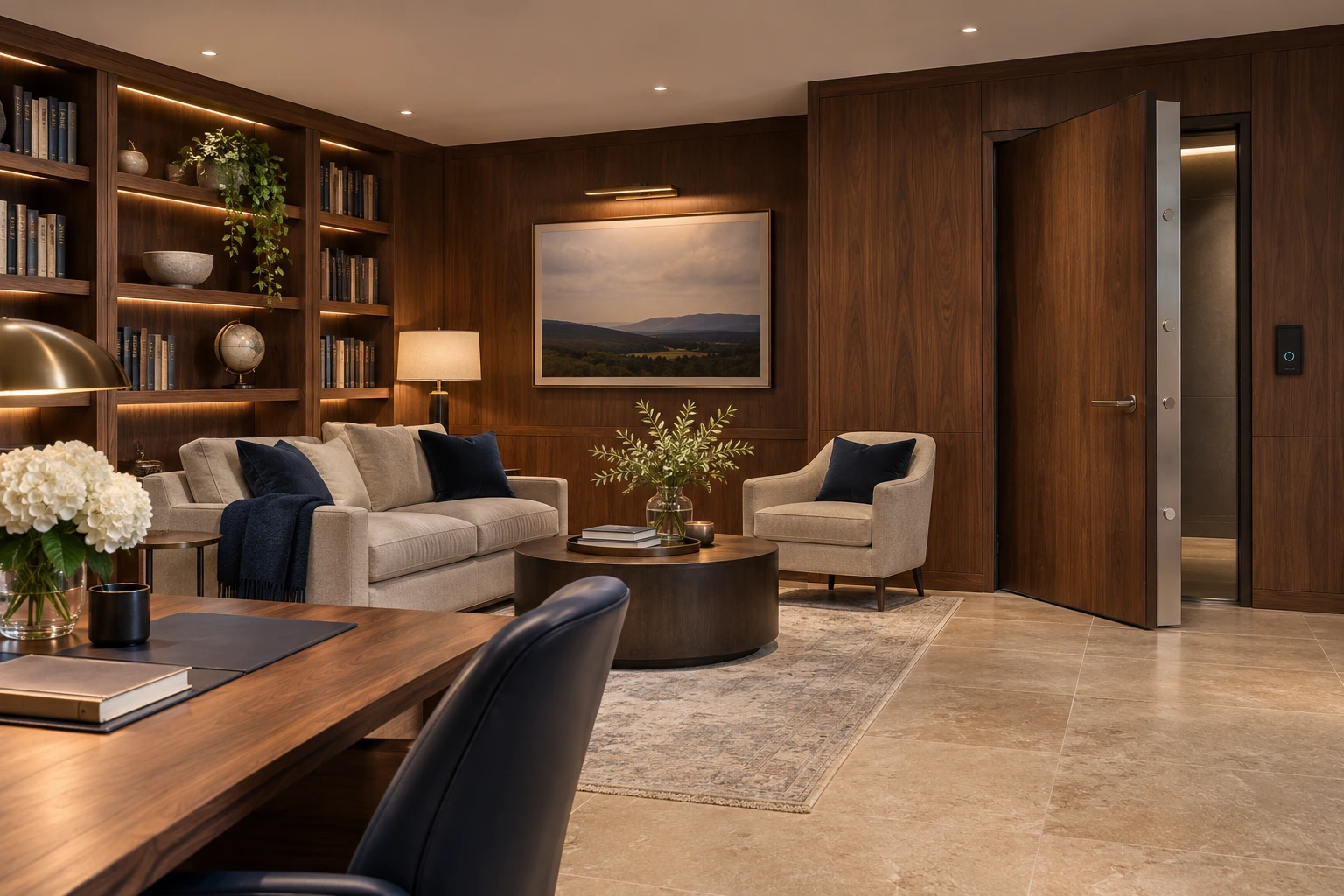
Safe rooms that belong within the home
A safe room or protected retreat needs to be considered as part of the wider house design. Its purpose is to provide a protected space within an agreed response plan while remaining practical for the people who may need to use it.
We help develop the requirement and implement appropriate measures, bringing the room’s protective role together with access, communications, household procedures and the surrounding design. The location, occupancy, accessibility and relationship with the rest of the home are considered within the confidential project brief.
The specification follows the threat assessment and the requirements of the particular property. Relevant building, fire, technical and specialist inputs need to be coordinated within the design and delivery team. Household members should understand the intended use, contact arrangements and review process.
The result should feel like part of a well-considered home. Detailed layouts and protective specifications remain within the agreed project team.
From architectural brief to implementation
Understand the family and the property
We establish the household’s routines, profile, priorities and existing arrangements. A security risk and threat assessment gives the design decisions a reason: which exposure matters, what the measures should achieve and where resources should be focused.
Develop a coordinated security design
The operational requirement is brought into discussions with the owner’s architects, designers, builders and appointed specialists. Physical measures, technology, safe rooms, access and household procedures are considered together, with responsibilities and dependencies made clear.
Implement the agreed measures
Pegasus Ops helps carry the design through into practical delivery. Scope, equipment, supplier interfaces, installation responsibilities and project stages are agreed so the implemented measures reflect the brief. Changes to the building or household are reviewed against the intended protective outcome.
Test, brief and hand over
The agreed handover should cover operation, reporting, maintenance responsibilities and the actions expected when a concern arises. Any commissioning checks, authorised security testing, staff briefing and follow-up review are defined in the project scope. The family or estate manager needs to know both how to use the measures and who to contact.
Protect the property while it changes
Security during a build or refurbishment can differ from the completed arrangement. Contractors, temporary access, incomplete infrastructure and changes to occupancy should be considered within the works plan.
Our residential experience includes securing a rural estate during renovation, integrating personnel, access arrangements, K9 and drone capability within an operational framework. That experience helps connect the design discussion with the realities of a changing site.
Where required, residential security teams provide a separately agreed operational presence. A home security assessment can review an existing residence, while family-office security connects responsibilities across the family’s properties and advisers.
Safe room installation and integrated security systems
One coordinated project brief
Safe room installation, sometimes described as panic room installation, needs a coordinated requirement across the owner, architect, builder and relevant specialists. Pegasus helps connect the protective purpose with practical implementation, including the interfaces between physical measures, technology, communications and household procedures.
Project responsibilities should identify who designs, supplies, installs, tests and maintains each element. Changes during construction need to be reviewed against the intended protective outcome and the surrounding building design.
A handover the household can use
Security systems design should explain how access control, cameras, detection and communications work together. The agreed handover can address user access, operating instructions, support contacts, maintenance responsibilities and staff briefing, rather than leaving the owner to coordinate disconnected products.
For an existing property, a home security assessment can establish the priorities before design or installation begins. Detailed protective specifications are developed privately within the project team.
Questions owners and project teams ask
How do I choose a home security system?
Start with the property and the response you need. Identify what should be detected, which areas need useful camera coverage, who may enter, and who receives and assesses an alert. Then compare the proposed alarm, CCTV, access control and communications against those purposes.
Ask how the systems work together, who can access recordings and controls, what happens during a power or connection failure, and which maintenance or monitoring charges continue after installation. The handover should include user training, named support contacts and agreed checks. Pegasus helps design and implement the measures around the household and project brief; detailed equipment and delivery responsibilities are confirmed in the proposal.
When should Pegasus become involved?
Ideally while the brief and architectural decisions can still be influenced. We can also review an existing home or a project already under way, identifying practical priorities for its current stage.
Do you only provide a report?
No. We help shape the design and implement security measures, including safe rooms and technology. The proposal identifies the design, delivery, coordination and ongoing support included in the particular engagement.
Will security dominate the appearance of the house?
The design should respect the home’s architecture and the family’s lifestyle. We consider discretion and usability alongside the protective requirement, discussing choices with the owner and design team.
How is the work priced?
The property, project stage, assessment, design work, equipment, implementation and review requirements determine the scope. The proposal explains the stages, responsibilities, fees and any separately priced work before the engagement proceeds.
Tell us what you need to protect.
Discuss the property, your priorities and the timing with Pegasus Ops. We will agree a focused next step and an appropriate way to review the detail.