


You Should Be Able to Close Your Front Door and Feel Safe
Behind every protective arrangement is a family trusting that someone has thought it through. Have the people closest to yours been given what they need?
At home, you should be able to stop thinking about security.
For family offices and estate managers, effective estate security means connecting household staff training, trusted access and emergency planning with the family’s wider protection.
Your children should be able to play. Your partner should feel comfortable answering the door. You should be able to leave for work knowing the people looking after your family understand what to do if something feels wrong.
That is what you believe you have put in place when you invest in protection.
But look beyond the gates, cameras and alarms, and ask a more personal question.
Have the people you trust with your family been prepared for the responsibility you have given them?
Does the nanny know how to handle a convincing request to change a collection arrangement? Does the house manager know whom to call about a concern that does not yet look like an emergency? If a trusted member of staff leaves tomorrow, does anyone know which keys, accounts and information they can still access?
These questions reach into the ordinary life of a household. The familiar faces. The daily routines. The small decisions made while a parent is elsewhere.
A family may believe its staff have been trained. Staff may believe the security team has everything covered. The security team may have been appointed to protect the principal, with little responsibility for what happens inside the home.
Each assumption can leave something important unattended.
What the household may be carrying unseen
In The State of Family Office Estate Security, Presage Global and Nines surveyed 102 people involved in private household and family-office operations. Three findings deserve particular attention:
of respondents received no formal annual security training.
never refreshed staff background checks after the initial hire.
reported none of the listed scenarios had a documented and tested response plan.
Source: Presage Global & Nines (2026), pp. 39, 46 and 53. Survey conducted September–December 2025. This small, predominantly US-based survey records reported practices and perceptions; it does not establish causation or predict an individual family’s risk. Read about the research →
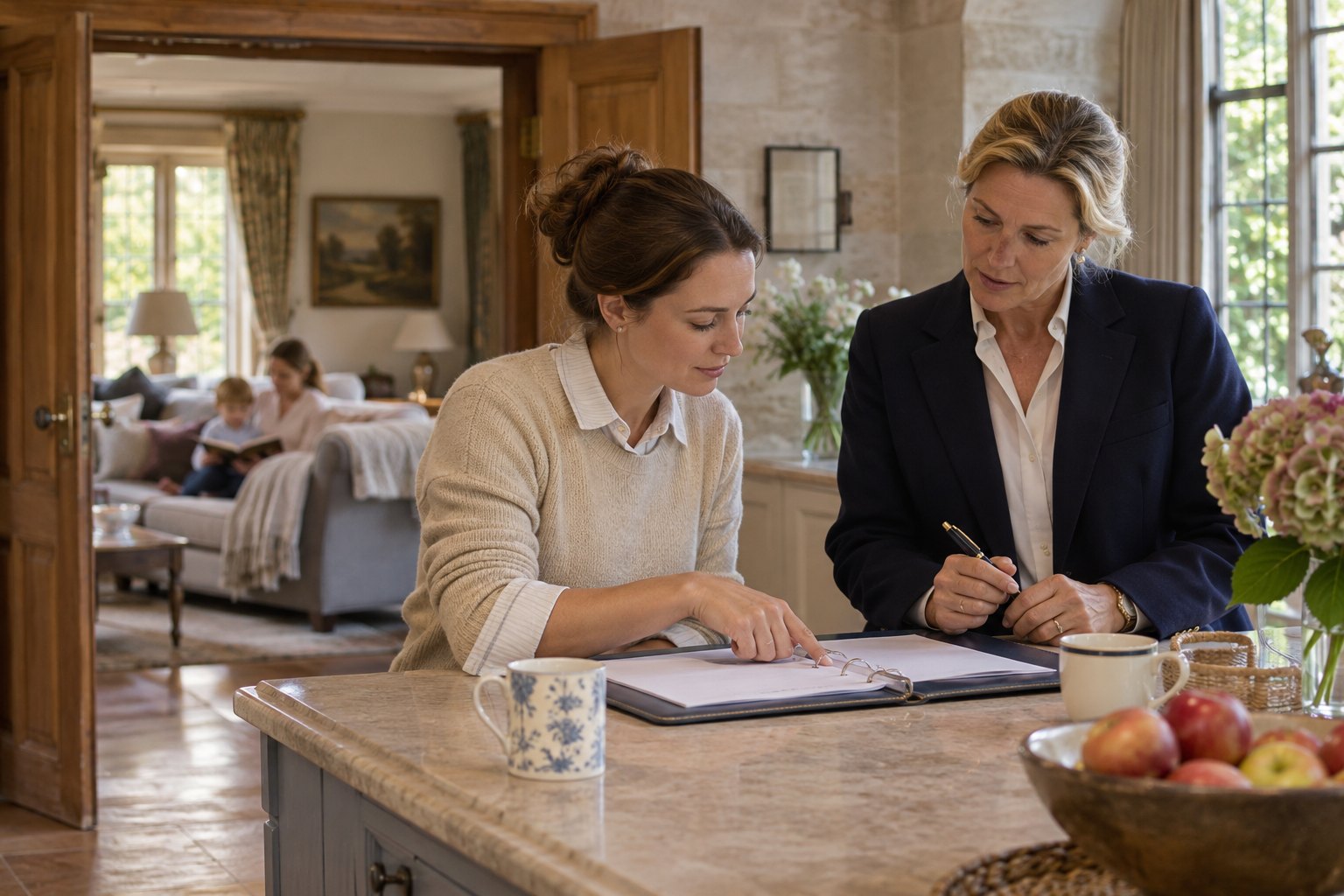
Household staff training: trust is a responsibility on both sides
Think about the person who collects your child, recognises when they are unusually quiet, knows which relative is visiting and notices a car that has appeared several times near the house.
They may understand the rhythms of your family better than almost anyone. That familiarity matters. So does giving them the training, authority and support to act when they notice something they cannot explain.
A trusted employee should be able to raise a concern without feeling foolish, interrupt a routine to verify an instruction and reach someone who can make a decision.
When we ask people to look after what matters most, we owe them clear instructions and someone to turn to.
Images are AI-generated editorial illustrations. No client, employee or actual household is depicted.
The gap between “someone knows” and knowing who
A hypothetical example is enough to expose the question. A message arrives asking a caregiver to change a child’s collection arrangements. It appears to come from a parent. The request sounds plausible, and everyone is busy.
The safeguard is an agreed way to verify the instruction, a clear record of who may authorise a change and a contact who will answer. The caregiver needs to know that checking is expected, even when the message sounds urgent.
The same question runs through the estate. Who authorises a contractor’s access? Who receives an observation from the grounds team? Who confirms that an overseas residence is ready before the family arrives?
Where those answers are unclear, a household is asking individual staff to carry decisions that should have been settled together.
Five estate security questions worth asking before you need the answers
Who holds the whole picture?
A family office may coordinate several residences, household teams and specialist providers. Identify who owns the protective plan, who may approve changes and how concerns reach them. Each location needs clear responsibilities while the family retains an understandable overall view.
Have we practised the moments that matter?
Walk through an unexpected collection request, a missing child or a medical emergency. Establish the first actions, the information needed and who contacts whom. An exercise should leave people more capable and expose instructions that are unclear or impractical.
Does access still match the responsibility?
Staff duties change. Contractors finish work. People move between properties. Review keys, codes, accounts and information when those changes occur. Consider whether role-specific vetting needs review, with appropriate authorisation and information handling. An old check cannot answer every new question.
Could the household cope if a key person were absent?
If the estate manager became unavailable tomorrow, could an authorised colleague find current instructions, reach the right providers and manage outstanding concerns? Record essential knowledge where the family controls it, with permissions that protect sensitive details.
Will the family and staff actually use the arrangements?
Ask what makes a procedure difficult to follow: delay, confusion, embarrassment or unnecessary intrusion. Explain why it matters and make it workable. Families need space to live, and staff need a process they can follow on an ordinary, busy day. Review the arrangements when homes, routines and responsibilities change.
Start with the family. Follow the responsibilities.
At Pegasus Ops, an agreed family-office security assessment can connect the household, properties, movements and existing protective arrangements. The aim is to identify the decisions that need attention and explain who should take them forward.
That may lead to estate security, household staff vetting, travel planning or emergency preparation. Each instruction needs a defined purpose, deliverables and cost.
For childcare professionals, our Protective Caregiver Programme develops protective awareness, information protection, everyday safety and communication within the wider household. It recognises the contribution of the people trusted with a child’s daily life, while preserving the nurture and independence children need.
A useful review ends with priorities the family can understand, named owners and dates for checking progress. Implementation and continuing support are scoped separately.
You should be able to close your front door and feel safe. The people you depend on should understand how they help make that possible.
How well do your arrangements fit together?
Discuss a defined family-office or estate security review. Begin with the broad concern and the general locations involved; detailed household information can follow through an agreed private channel.
Arrange a private conversation →